Signal
Loading the stream…
WDSF 2026 results are on record — 10 awards · 11 winnersSee the record →
Loading the stream…
What’s moving in agentic workstations and workflows — drawn from a reviewed source list, scored, and kept at a permanent address you can cite.
Curated and full layers · newest first · scored, sourced, citable
The ledger as a map. Dashed edges are machine-suggested (embedding similarity and duplicate clusters); solid edges are editorial — they appear only where a blog post cites an entry.
Raw data: signal-graph.json
Filter by category
285 entries in the full stream matching the current filters
Announcement of smolbenchmark, a community tool designed to help users identify the best local LLM model for their specific hardware configuration.
Firsthand release of a model-fit benchmark tool, directly relevant for anyone selecting or tuning local LLMs against their machine's capabilities.
Intel's Linux NPU driver has added official support for Ubuntu 26.04 LTS, enabling neural processing unit acceleration on the upcoming long-term support release.
Confirms the Intel NPU driver is queued for Ubuntu's next LTS, useful for users planning local AI inference on Intel NPUs.
A Reddit post on r/LocalLLaMA asking whether to use Unsloth's 8-bit UD-quant or the faster 6-bit variant for Qwen3 27B, specifically for coding workloads.
Concrete quantization trade-off question for a specific model; community replies likely include speed/quality benchmarks useful to anyone running this size locally.
A tip from r/LocalLLaMA suggesting that an old, slow GPU with low VRAM can still be put to use by offloading only the vision mmproj component in llama.cpp, rather than being discarded.
Names a concrete second-life use for spare GPUs inside a multimodal llama.cpp stack, where the vision encoder fits where a full LLM does not.
Reddit post titled as claiming an NVIDIA RTX 5090 GPU with 96GB of VRAM; no body content is available, and the figure conflicts with the actual 32GB specification of the RTX 5090.
Title-only claim contradicts the RTX 5090's documented 32GB VRAM; no excerpt or evidence to assess.
Reddit post asking whether pairing a Zima Board 2 with an RTX 2000 ADA is the most affordable way to run a self-contained Qwen 27B model endpoint.
Useful as a budget-hardware reference point for local LLM inference, but the post itself is a question with no excerpt — value depends on replies.
User on r/LocalLLaMA asks which GPUs at roughly $15k can run DeepSeek V4 Flash and similar models at good speeds without heavy quantization.
Clear budget-plus-model hardware query; useful as a pricing and capability signal for local LLM rigs, though it is a buyer question rather than tested advice.

Video titled "PCIe Geometry for the Minisforum MS-03" from Level1Techs. No substantive content is available; only YouTube's default page text is present.
Body is YouTube boilerplate with no extractable information; the title alone hints at a niche mini-PC PCIe layout breakdown, but nothing to act on.
A Reddit post on r/LocalLLaMA asking if any users have experience running local models on GPUs with 12GB of VRAM. No additional content is available beyond the title.
A recurring sizing question in local-LLM forums; community replies can surface which models and quantizations fit a 12GB budget, but the post itself carries no data.

A developer built gPTY, a terminal multiplexer using Godot and Rust, supporting tiled PTY panes with features like adjustable FPS for power management. It is used to orchestrate autonomous AI agents, with roadmap items including markdown rendering, a local wiki framework, and media panes.
Novel pairing of a game engine and Rust for a terminal multiplexer, with a concrete agent-orchestration use case and power-aware rendering control.
A Reddit post on r/LocalLLaMA directs attention to the 0:04 mark in Apple's official Mac Studio video, highlighting it as evidence of the machine's AI capabilities.
Useful pointer for readers tracking Apple's positioning of Mac Studio as local AI compute, though the underlying clip is Apple's own marketing rather than independent benchmarking.

A demo of wiring eight NVIDIA DGX Spark units into a 1TB VRAM cluster using a 400 Gbps network switch, with gear purchase links included.
Early first-build of a multi-unit DGX Spark cluster; concrete wiring and switch choice documented for anyone planning local AI compute at this scale.
Part 4 of a user's investigation running Qwen3.8-Flash-Next on 2x RTX 3090 GPUs with DDR4, reporting 2.2-2.5x faster prefill by evicting the MoE expert cache off the GPU while the prompt is being processed.
Specific benchmarked MoE prefill trick on consumer 3090s, with hard numbers across an ongoing series - directly usable for anyone running large MoE models on multi-GPU rigs.

Copperhead is a beta-stage tool described as 'Cursor for circuit boards,' positioning it as an AI-assisted design environment for PCB development, paralleling Cursor's role for code.
Flags a 'Cursor-analog' appearing in PCB design; brief but tracks the spread of AI pair-programming patterns into hardware engineering workflows.
A user on r/LocalLLaMA shared a server rebuild featuring a custom liquid cooling loop with 2x RTX Titan 24GB and 1x RTX 2080 Ti 22GB GPUs, totaling 70GB of VRAM for local AI inference.
Specific 70GB VRAM build reference for those planning large local model inference; the post itself is a build showcase with no extracted details.
A Reddit post announces INT4 quantized builds of NVIDIA Cosmos 3 (64B parameters) for local image generation, targeting both CUDA (NVIDIA) and MLX (Apple Silicon) runtimes.
Running a 64B image model locally at INT4 on both NVIDIA and Apple Silicon is a concrete capability update, not a generic release note.
A Reddit post on r/LocalLLaMA titled "Now this is a serious local machine" with no excerpt or body content available to assess details, specs, or context.
No body content provided; the title alone is generic hype common to local-LLM build posts, offering no verifiable detail or reusable information.
Reddit post on r/LocalLLaMA reporting a setup for running DeepSeek-V4-Flash-Vision-Exp, a 285B parameter MoE model, across 10-12 RTX 3090 GPUs, covering speculative decoding and vision inference configuration.
Concrete multi-GPU consumer config for a large vision MoE model, with speculative decoding details — directly useful for local inference planners.

Notebookcheck reviews the Dell Pro 7 14 P714260 business laptop in both Intel Core Ultra 7 366H and AMD Ryzen AI 9 HX 470 configurations at similar prices, concluding neither is a wrong choice for most users unless specific traits are prioritized.
Side-by-side benchmark data on two CPU variants of the same business laptop chassis gives buyers concrete comparison points for an AMD vs Intel decision.
Reddit guide on selecting GPUs for local LLM workloads, comparing models by gigabytes of VRAM per dollar and memory bandwidth to inform purchasing decisions.
A GB-per-dollar and bandwidth breakdown gives readers a concrete reference for matching GPU purchases to local LLM model sizes and budgets.
A Reddit post claims a 400MB Qwen3-0.6B model runs locally on a 2017 Samsung Note 8 phone and is used to drive a real desktop Chrome browser session via the phone.
Firsthand demo extending the lower bound of edge hardware for agentic browser control with a local small model on a seven-year-old phone.
A custom llama.cpp build optimized for AMD 7900XTX GPUs (single or dual), targeting Qwen 3.8B and 27B models, with PCIe x4 and tensor parallel optimizations included.
Specific fork and optimization notes for a common high-end AMD card; useful for anyone running Qwen locally without the trial-and-error tuning.
A Reddit post demonstrating voice-based conversations between Gemma4 12B and E2B models running on GPU and NVIDIA Jetson Orin edge hardware. No further details are available from the excerpt.
A real-world test of local voice LLM interaction on Jetson Orin, a less common edge deployment target. Useful reference for anyone sizing model workloads for embedded GPU hardware.
Discussion on optimizing llama.cpp for AMD Strix Halo hardware to achieve maximum inference throughput, addressing limitations of the official build for this platform.
Strix Halo is new enough that hands-on llama.cpp tuning advice is scarce; useful for owners of that hardware chasing better local inference performance.
A user on r/LocalLLaMA asks whether the Qwen Next model can be run on a workstation with 24 GB plus 64 GB of VRAM across two GPUs. No excerpt or responses are available.
Common hardware-fit question for local LLM runners; low signal without an excerpt or accepted answer confirming whether the split is feasible.
A Reddit user asks for advice on adding an RTX 2000 Ada 16GB GPU to their gaming PC for local AI inference, motivated by power/wattage constraints.
Relevant for readers budgeting GPU power draw against inference throughput, but the post is a bare question with no excerpted answers or firsthand benchmarks.
A user on r/LocalLLaMA reports a local AI workstation built on two AMD RX 9700 GPUs with 64GB DDR5, running vLLM to serve the Qwen 3.8 27B model, describing the setup as a high-performance machine.
Documents a specific dual-R9700 + vLLM + Qwen 27B local inference configuration, relevant for those planning AMD-based local AI workstation builds.

A YouTube creator documents building a cluster of eight NVIDIA DGX Spark units providing 1TB total VRAM, working around NVIDIA's official limitation of two-device configurations.
Firsthand 8-unit DGX Spark cluster with 1TB VRAM, showing a path beyond NVIDIA's two-unit documented limit. Concrete for anyone planning large local inference setups.
Benchmark of a Qwen3.8-Flash-Next oQ4e mtp quant showing 45 tok/s on M4 Max and 25 tok/s on M2 Ultra for local inference, measured by llm-bench.io.
Concrete throughput numbers on two Apple Silicon chips for one specific quant, useful when sizing local LLM setups on Mac hardware.
A Reddit post on r/LocalLLaMA asks for opinions on running the Ling 3.0 tiny model on CPU. No further content or excerpt is available.
Title-only post soliciting opinions on a small model running on CPU; no body, no data, no setup details to extract.

Unboxing video of the MSI EdgeXpert GB10, a compact AI workstation also known as the NVIDIA DGX Spark, with affiliate links to 400Gbps networking switches.
Early hands-on footage of a rare AI workstation SKU before broader availability, useful as a sizing and form-factor reference for prospective buyers.
A Reddit benchmark post comparing three inference engines (NInfer, llama.cpp, vLLM) on a Qwen3.8-27B NVFP4 model running on an RTX 5090, measuring both output quality and tokens-per-second.
Hands-on comparison of inference backends on the newest consumer GPU with a fresh NVFP4 quantization format, useful for anyone sizing local LLM serving stacks.
A post on r/LocalLLaMA titled 'AMD unveils Threadripper Halo Station'; no excerpt or body text is available, so the content is unverifiable from the title alone.
Title suggests a workstation-class AMD Threadripper reveal relevant to local LLM rigs, but no body text means the actual details, source, and utility are unknown.
Reddit thread asking whether to spend roughly $15,000 on a home server now or delay the purchase.
Open-ended opinion poll with no excerpt or data; no reusable signal for readers.
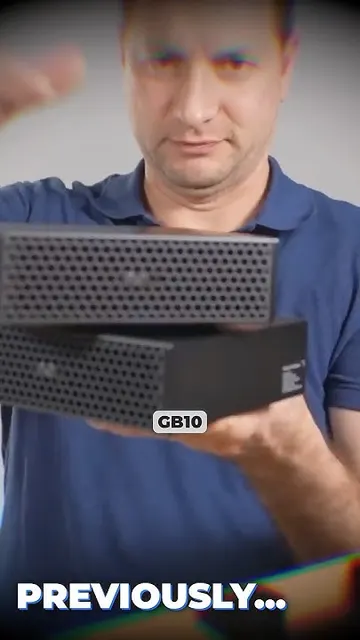
Alex Ziskind demonstrates connecting two Dell GB10 (DGX Spark) machines into a 2-node cluster, with affiliate links to 400Gbps switches used for the interconnect.
Firsthand walkthrough of wiring two DGX Spark units with specific 400Gbps switches, useful for readers planning multi-node local AI compute setups.
A Reddit post on r/LocalLLaMA referencing the MINISFORUM MS-S1 MAX-P495 hardware product, with no content excerpt available to assess further details.
Likely a user-facing post about a MINISFORUM mini workstation of interest to local LLM runners; worth a quick look for real-world impressions.

YouTube video page titled 'Unholy Strix Machine! Doubling up with R9700s' by Level1Techs. No substantive content, transcript, or description was provided beyond the standard YouTube platform text.
Submission contains only YouTube boilerplate with no extractable information on the hardware or setup mentioned in the title.
Reddit thread on r/LocalLLaMA asking whether hardware shortages relevant to local LLM workloads are easing. No content excerpt available.
Speculative community question with no excerpt to confirm substance; likely repeated discussion rather than fresh supply data.
A Reddit poster argues that KV cache memory requirements may constrain local LLM deployment more than raw parameter count, suggesting model selection and hardware planning should account for cache size rather than focusing solely on parameter totals.
Reframes the local-model sizing problem around VRAM cache rather than weights — a constraint readers often overlook when picking hardware or models.
User reports running Qwen3.8-Flash-Next on two RTX 3090s with DDR4, achieving decode speeds of 25–29 t/s (up from 17 t/s) after applying a specific expert cache pull request for the MoE model.
Concrete before/after benchmark of an MoE expert-cache PR on consumer GPUs, with reproducible hardware and token-rate numbers useful to local-inference tinkerers.
Perplexity released an open-source inference server for running Qwen models locally on Apple silicon Macs.
Company open-sourcing their own inference stack gives Mac users a concrete local option; worth checking repo against your hardware before adopting.
A post on r/LocalLLaMA claims that GLM 5.3 Flash was used to create a black hole mod for Minecraft, running entirely locally on a setup of 4 RTX PRO 6000 WS GPUs. No further details or benchmarks are provided in the available excerpt.
A data point on running a non-trivial model-driven creative task locally across four of NVIDIA's newest workstation GPUs, though the post lacks evidence and the model name appears unverified.
ErgoAssist is a head-worn ergonomic system that combines IMU-based posture tracking with consumer-grade EEG to estimate cognitive load. By detecting the user's mental state, it issues posture alerts only when the user is unlikely to be in deep focus. Lab results show 81% posture classification accuracy and 81% alert reduction alongside 38% better posture correction.
Couples posture detection with cognitive load to fix the core failure of ergonomic wearables: interrupting during focus. The 81% alert reduction with better outcomes reframes alert design as a context problem.
Research prototype of a fabric water-bottle sleeve with sensors and a small display showing a virtual pet. Drinking, standing, and refilling act as pet-care actions. A 20-student two-week study reported higher water intake and more movement episodes, alongside noted design tensions around guilt and focused work.
Concrete first-deployment data on a novel pet-based desk-side wellness device, with explicit design tensions flagged. Useful for anyone prototyping habit-formation hardware for desk workers.
A user on r/LocalLLaMA reports running a 104GB Qwen3.8-Flash-Next model on a 48GB Mac, achieving roughly 12 tokens per second generation speed.
Firsthand throughput numbers for a 100B-class model on consumer Apple silicon, useful baseline for anyone planning local LLM hardware purchases.
A user on r/LocalLLaMA reports that 2 of 3 NVIDIA CMP 170HX GPUs failed within two weeks, and the third has defective tensor cores, arguing current prices do not justify the reliability risk when repurposing mining cards for AI workloads.
Documents a specific failure pattern in repurposed mining GPUs used for local AI, which is a practical risk worth noting before buying.
Hands-on review of the HiDock P1, an AI voice recorder for meetings that uses proprietary BlueCatch technology to intercept Bluetooth audio directly. The review highlights solid construction and unique features.
Notes a niche hardware approach to meeting capture via direct Bluetooth interception, useful for anyone comparing AI recorders.

A developer built 'slotstream,' a tool that runs the 125B-parameter Qwen3.8-Flash-Next in 4-bit on Macs with as little as 16GB RAM using expert-offloading and SSD streaming on MLX/Swift, achieving ~12 tok/s on a 48GB Mac. Ships with auto memory/speed mode; MTP speculative decoding planned.
Firsthand tool with working install and measured throughput, showing a concrete technique for fitting a 125B model onto consumer Mac hardware via SSD streaming.
Reddit post claims Qwen3.8-27B runs at 2,000 prefill tokens/sec and 132 decode tokens/sec on a single RTX 3090.
Concrete inference throughput on consumer hardware is useful for sizing local LLM setups against specific models.
ExLlamaV3 received recent updates adding CPU offloading, support for new models GLM-5.3-Flash and Qwen3.8-Flash, and improvements to SC (scoped) quantization formats for local LLM inference.
Concrete tool updates that change how local LLM inference is configured; useful for anyone running models on consumer hardware.
