Signal
Loading the stream…
WDSF 2026 results are on record — 10 awards · 11 winnersSee the record →
Loading the stream…
What’s moving in agentic workstations and workflows — drawn from a reviewed source list, scored, and kept at a permanent address you can cite.
Curated and full layers · newest first · scored, sourced, citable
The ledger as a map. Dashed edges are machine-suggested (embedding similarity and duplicate clusters); solid edges are editorial — they appear only where a blog post cites an entry.
Raw data: signal-graph.json
Filter by category
258 entries in the curated layer matching the current filters

GitHub released REST API endpoints in public preview for programmatically managing AI code scanning enablement on pull requests at both the organization and repository levels.
Programmatic control over AI PR code scanning lets teams wire security checks into automation without manual setup in the UI.
Academic paper presenting MOONWALK, a pre-production review system for animation/VFX that aligns intent, evidence, and action through a shared intent record, anchored references, structured WIP comparison, and supervisor-authorized action planning. An in-studio study with professionals found stronger intent alignment, decision traceability, and checklist executability than a chat-only AI interface.
Concrete design framework plus open-source implementation with empirical comparison against conversational AI in a real creative-production setting, addressing criteria drift and lost reasoning in senior-junior handoffs.
UnitBoost replaces the generative LLM manager in compound LLM systems with a non-generative merge operator: a task-given unit map, constrained argmax assembly, and explicit residual for next rounds. On three benchmarks it beats input-matched generative managers by 0.048–0.076 absolute points and improves six compound-system configurations.
Concrete alternative to LLM-as-manager in compound agent setups. Order-free operator with testable failure conditions and quantified gains over generative coordination.
Proposes the Discovery Certification Protocol (DCP) for auditing AI research agents via three gates: sealed evaluation, recovery tests withholding target history, and optional truthful-feedback measurement. Controlled audits in SQLite optimization and virtual catalyst tasks produced zero recoveries across 96 episodes, bounded at 0.0468, with a deterministic LLM-free verifier.
Concrete auditing framework with finite-sample statistical bounds for verifying AI research agent outputs, addressing a real verification gap in agentic workflows.
OpenAI announced the Agents API, a managed cloud service for building and launching agents. It uses the Codex harness to handle orchestration, long-running sessions, and tool use.
Official OpenAI release of a managed agent-building service. Relevant to anyone constructing agentic workflows, though the short announcement omits technical detail and pricing.

Amp's Mode Dial now lets users customize which models power each builtin mode (Oracle, main agent, subagents) via their own API keys, and place custom plugin agents alongside builtin modes on the dial, configurable by individuals or workspace admins.
Concrete configuration details for Amp's customizable mode picker, including model routing and custom agent slots — actionable for teams already on Amp.

GitHub has added enterprise managed permissions for Copilot agent operations, allowing administrators to centrally configure which agent actions are blocked, require human approval, or can proceed automatically.
Gives enterprise admins policy control over agent autonomy — useful for anyone deploying Copilot agents at scale and needing governance guardrails.

GitHub now lets repository rulesets block pull requests from merging when the PR introduces exposed secrets, scaling secret-detection protections across repositories.
One configuration change in repository rulesets adds an enforceable merge gate against leaked credentials, with no extra tooling required.

GitHub added 'agentic autofix' to its Code Quality feature, letting users select up to 25 standard findings on a page and assign them to an AI agent for automatic remediation.
Official GitHub changelog entry with a concrete batch limit and workflow step, usable by any team with GitHub Code Quality enabled today.

Amp now delivers messages to a working agent at the next opportunity rather than queuing them until the current turn finishes, so user feedback steers the agent sooner. Built-in actions like Ship and Review still queue. If steering feels too abrupt, rephrasing prompts as 'When done, then ...' helps.
First-party note on a real UX shift in mid-task agent interaction, with a concrete prompt-rewriting workaround for users who find the new behavior too aggressive.
Critical review of agentic AI systems covering tool use, multi-agent organization, persistent simulations, and robotics. Organizes evidence along delegated authority, temporal persistence, and environmental coupling, separating model from harness and environment. Proposes 'justified delegation' as a heuristic and outlines a research agenda for coupled model-harness evaluation.
Most agentic AI commentary conflates model capability with system-level reliability. This review separates those layers and names what is actually demonstrated versus assumed.
La Agente Óptima is an agentic framework that supervises Bayesian optimization campaigns in self-driving laboratories. It separates LLM reasoning from executed loops, keeping decisions auditable and intervening only when interpretation or revision is needed. Tested on five digital tasks and two physical platforms, it corrected a mid-run measurement failure and raised a flow-chemistry yield from 30% to 59%.
Concrete agent architecture validated on physical lab campaigns, with a documented mid-run failure correction. Reusable pattern for separating reasoning from long-running execution loops.
Introduces EVOHARNESSBENCH, a benchmark for evaluating LLM-based agents under controlled harness evolution across tools, skills, and agents. Comprises 802 tasks, 520 tools, 42 skills, and 62 agents. Results show harness expansion can degrade performance on previously solved tasks, and that retention and adaptation can conflict.
Surfaces harness-induced forgetting as a concrete failure mode. Relevant for anyone building agent tool stacks where capabilities are added over time.
A controlled study finds multi-agent LLM pipelines (Planner-Executor-Critic) provide no statistically significant improvement over a single evolved agent when total inference cost is held equal. On ALFWorld, the team scored 0.769 vs single agent 0.754 (p=0.80) despite 1.8x more evaluation calls; on WebShop the team trended worse.
A cost-controlled benchmark that challenges the common assumption that multi-agent topologies improve outcomes - the gains come from one executor, not the team structure.
MIVAIS is a dual-layered research platform for mixed-initiative visual analytics. Its infrastructure layer standardizes human-software agent state synchronization and communication; its study environment automatically logs multimodal telemetry (screen, audio, sensors). Authors validate it by replicating three existing VA systems and running expert case studies.
Concrete platform that lowers engineering overhead for prototyping and evaluating human-AI collaborative systems, with technical validation against three prior systems.
Research paper studying a teacher-facing agentic authoring system through a bounded trace of six build attempts and 37 workshop units. Finds that compilation layers added governance requirements, downstream stages normalized case-specific learning relations, and four attempts produced no usable payload with opaque repair messages. Proposes 'accountable translation' as a framework for making consequential changes attributable, inspectable, and contestable across technical and organizational handoffs.
Concrete trace data from a real agentic authoring system paired with a framework for accountability that generalizes beyond teachers to any domain expert using natural-language app builders.

A YouTube creator documents building a cluster of eight NVIDIA DGX Spark units providing 1TB total VRAM, working around NVIDIA's official limitation of two-device configurations.
Firsthand 8-unit DGX Spark cluster with 1TB VRAM, showing a path beyond NVIDIA's two-unit documented limit. Concrete for anyone planning large local inference setups.
The paper introduces Epistemic Fault Domains (EFDs) and a structural cut metric κ_E to formalize the failure mode where multi-agent quorums share upstream inputs, telemetry, or tool backends, collapsing multiple votes onto a single corrupted cause. It proves quorum size does not guarantee epistemic redundancy and presents the DAQC controller plus a 120-task benchmark.
Gives a precise vocabulary and runtime-enforceable metric for a correlated-failure mode in multi-agent voting that most teams currently handle only by intuition.
Proposes the Civilization Framework, in which the addressable unit is a 'civilization' (one human sovereign, a persistent ledger, interchangeable agents) rather than individual agents, with an Embassy Protocol for asynchronous inter-agent message delivery. A preregistered 1,908-trial experiment reports a temporal-weight effect: incorrect upstream claims arriving first captured 54.2% of receiver answers. Results are flagged exploratory.
Concrete hazard in AI-to-AI communication with measured effect size, plus a working protocol proposal; exploratory status and failed tool-use check temper the weight, but the framing is reusable for anyone designing agent handoffs.
An arXiv paper tests whether LLM agents can evade activation-based monitoring probes when explicitly told they are being watched. Using two game-theoretic scenarios (blackjack and prisoners' dilemma) with Qwen3-32B-AWQ and GPT-OSS-20B, the authors find the best probes retain accuracy across baseline, aware, and feedback conditions, and agents continue to collude.
Controlled experiment shows activation probes hold up against aware agents, useful for anyone designing oversight in multi-agent deployments.

LangChain has revamped MCP support in langchain.mcp to align with the July 2026 spec rewrite, which introduced a stateless core. Elicitation is handled as a LangGraph interrupt, and tool lists are cached. MCP Tier 1 SDKs approach 500M monthly downloads, and ChatGPT MCP tool calls grew 98x in 2026.
Concrete technical details on LangChain's updated MCP integration, plus adoption figures, that anyone wiring agents to tools needs to know about.
Researchers formalize the 'epistemic Sybil problem' in multi-agent AI systems, showing that multiple agents sharing a common evidence root do not produce independent observations. Controlled experiments with over 20,000 LLM-agent calls demonstrate that naive aggregation collapses posterior coverage from 0.94 to 0.26 as report count rises from 1 to 32, while correlated extraction errors further degrade calibration.
Challenges the assumption that more agents equals more evidence, with empirical calibration data showing how multi-agent aggregation can mislead without tracking evidential ancestry.
Paper introduces Tool Primitives, wrapping tools with LLM interfaces that use natural language instead of rigid API schemas. It presents ToolFace (a 25,519-function repository with dynamic retrieval) and HEART, a Planner-Router-Verifier framework. HEART reportedly outperforms SFT models by 10% and frontier models by 6% on average, with 84% completion on 50 real-world tasks and up to 85% lower API cost.
Concrete agent tool-orchestration architecture with benchmark results against frontier models. The natural-language-as-tool-interface idea is a notable design choice worth examining for agent stack builders.
ArcticSwarm is a multi-agent research architecture that separates evidence gathering from integration. Subagents post findings to a shared bulletin board while gated isolation prevents premature consensus; structured review at three commitment boundaries filters low-confidence candidates. It reaches 82.6% on BrowseComp-Plus with Qwen 3.5-27B and 73.6% on live-web BrowseComp with GPT-5.
Multi-agent research pipelines that vote early converge prematurely. The gated-isolation plus structured-review pattern is a concrete fix with measured lift on BrowseComp-Plus and BrowseComp.
Introduces PROS, an interactive editor for scientific posters that addresses the 'articulation gap' by letting the system surface source-grounded candidate problems while users retain authority over which become repair goals. Includes PROS-Bench (120 papers, 320 PPTX posters) and reports VLM-rated diagnosis quality of 67.2/100 with 87.6% operator-verified target resolution.
Formalises the distinction between problem discovery and committed action in agentic editors, with a concrete benchmark and quantified evidence that the two can diverge.

Hugging Face announces Funes, a local single-binary memory layer for coding agents (Claude Code, Codex, pi, Hermes) that indexes session traces for retrieval, ranking, and provenance, with optional sync to a user-owned private dataset.
Funes converts existing agent session logs into searchable ranked memory with no ML runtime dependency, addressing the long-standing gap of cross-session context for coding agents.

A Thoughtworks field report describes 'hyper-agentic' — 10 engineers in one Barcelona room using agentic engineering to build an airline IROps system, during which they 'accidentally re-discovered' a coordination pattern for multiple agents (the 'blackboard').
Firsthand account of a real multi-agent engineering exercise with a named coordination pattern worth noting for anyone designing agentic workflows.
ChatDev 2.0 (DevAll) is a no-code platform for building, executing, and inspecting LLM-based multi-agent systems. It pairs a declarative executable graph with a cycle-aware execution engine to support heterogeneous agents and cyclic interactions, and provides a visual interface for authoring and monitoring without code. Open-sourced on GitHub by OpenBMB.
Claims to resolve the expressiveness-versus-simplicity tradeoff in multi-agent tooling, and ships as a usable open-source release with a visual interface and GitHub repo.
The paper proposes control-data flow separation for multi-agent LLM systems: execution-critical protocols become typed, validated program objects while task content remains optimizable natural language, preventing prompt edits from corrupting routing or formatting logic. Tested on reasoning, review, and insurance rating workflows with 100% protocol validity.
Identifies a concrete failure mode in multi-agent prompt optimization and offers a typed separation pattern with empirical validation across three domains.
A research paper tests whether LLMs can maintain exact intermediate state across long sequences of dependent tool calls by having a model compute MD5 step by step across 196 calls and 64 rounds. Using gpt-oss-120b, it finds that keeping the model's own reasoning in context and voting over a thinking-enabled worker enables correct end-to-end execution.
Isolates state-tracking from instruction following using a cryptographic ground truth, and surfaces two concrete fixes—context-resident reasoning and worker voting—for long-horizon agent failures.
A source-code anatomy of eleven production coding agent harnesses (Claude Code, Codex CLI, Gemini CLI, Aider, OpenHands, etc.), mapping seven canonical subsystems with minimal and maximal implementations, cataloging 29 recurring design patterns, and including a longitudinal sample showing convergence over one quarter. Closes with 18 design recommendations and a minimum-viable-harness scaffold.
First systematic source-code dissection of major coding agents across ~4M LOC, yielding concrete patterns and a 90-line scaffold readers can actually build from.
A three-week diary study with 8 blind screen-reader users evaluated OLLA, a computer-use agent prototype, across 1,258 commands in 12 desktop applications. GPT-5 achieved the highest success rate at 52.5%, with trace analysis identifying grounding, planning, constraint-tracking, and termination failures.
First diary study with blind users on real desktop workflows; names specific failure modes and benchmarks five models, useful for agent builders and accessibility practitioners.

GitHub Copilot's code review feature can now approve pull requests when it determines they are ready, with admins able to authorize the AI to sign off on approval. The approval capability is opt-in.
Official changelog entry on a new capability that lets an AI agent finalize PR reviews, shifting who or what can sign off on merges.
ASTRA is a multi-agent system for technical ticket resolution. A central orchestrator coordinates three specialist agents (historical case retrieval, log analysis, domain knowledge via MCP) and drives a judge-orchestrator refinement loop producing claim-evidence-grounded reports. Evaluated on 987 real telecom tickets, mean quality 4.13/5, fabrication below 3%, hardware faults notably harder than software.
Concrete multi-agent architecture with claim-evidence grounding and a judge-orchestrator refinement loop, benchmarked on nearly a thousand real tickets. The hardware-fault gap (Cohen's d=0.80) is a useful boundary condition for anyone building similar systems.
ArXiv paper introducing Logos, a cross-process agent harness modeled on ROS. Agent plugins run as separate processes sharing an append-only transcript. Four lemmas derived from an existing agent calculus justify the design, and experiments show 80 sessions resume cleanly after kills at tool-call boundaries, with faults isolated to a single node.
Formal architectural alternative to single-process agent runtimes, with concrete fault-isolation results. Useful for builders designing resumable, multi-agent systems.
GOD is a local-first browser control room for multi-agent simulations, combining a setup wizard, Agent Studio, Map Studio, spatial replay, and Ask/Intervene commands, plus portable experiment and map packs. Evaluation across 15 runs shows 78/84 intervention-target checks and 169/182 state-query checks matched expected values.
Addresses a real gap in multi-agent observability: operators can query, intervene, and replay live agent societies instead of choosing between finished replays and raw logs.

Amp's coding threads now include a built-in voice and video space. Pressing Enter opens a call where users can turn on their camera, share screens, and talk with teammates while the agent runs, eliminating the need for separate conferencing tools.
Notes a concrete workflow pattern: co-locating live communication on the same surface as the agent's work removes the context-switch cost of jumping to an external call app.
MemToC is a controlled benchmark for evaluating how LLM agents arbitrate between parametric memory and tool returns when the two conflict. Across five 7-9B open-weight models, instruction-tuned variants retain a verified-correct answer against an incorrect tool in only 6.5-17.1% of cases. SFT and DPO improve arbitration on some backbones but reduce abstention after tool errors.
Quantifies a specific failure mode in tool-using agents and offers a benchmark plus fine-tuning baseline for anyone designing agent arbitration policies.
SKILL.state is a runtime architecture for LLM agents that replaces append-only conversation history with a mutable, structured execution state. Intermediate reasoning is discarded after each validated state update, reducing token use and preventing context-poisoning. Experiments across datasets and models show improved task accuracy and lower cumulative token consumption.
Offers a concrete architectural pattern for the well-known context-bloat problem in long-horizon agent runs, backed by empirical results rather than just a proposal.
A failure study of 147 incidents across 81 runs in a production agentic software-delivery platform shows that service-mesh primitives (retry, timeout, circuit breaking) fail for non-idempotent agent delegation. The authors identify two root concepts—identity adequacy and evidence adequacy—and derive seven reliability primitives whose enforcement unit is the delegation rather than the message.
Production incident data on agent delegation is uncommon. The paper quantifies how standard mesh assumptions break in agent contexts and supplies two concepts plus seven primitives orchestrator builders can adopt.
Paper tests a zero-shot manager-worker multi-agent scaffold across nine LLMs on 100 hard LiveCodeBench problems without training. Gains are model-dependent: up to +42 points for some models, null or negative for others. The scaffold roughly triples token cost but is often cheaper per unit of accuracy than scaling to a larger model.
A controlled, per-model breakdown of when multi-agent scaffolding actually helps coding — directly useful for deciding whether to add orchestration to a coding workflow.

GitHub Copilot code review now reviews pull requests authored by bots, including those from the Copilot cloud agent, and handles very large pull requests, with added resolution reasons for the review outcomes.
Official changelog entry documenting two specific expansions to Copilot's automated review scope that affect bot-driven and large-scale PR workflows.

Anthropic opened a research preview of the Model Hardware Standard (MHS), a shared specification letting AI agents operate lab and manufacturing instruments such as microscopes, liquid handlers, and robotic arms in parallel. Co-developed with HHMI Janelia, MHS is model-agnostic, works with any device exposing a programmable interface, and uses protocols like MCP.
First-party detail on a new agent-to-hardware standard with named collaborators, MCP grounding, and a live preview program rather than vague vision.
Systematic empirical study of adversarial vulnerabilities in LLM-based multi-agent trading systems, examining how poisoned signals propagate through four agent roles (Analyst, Researcher, Trader, Risk Manager) and four communication topologies, with experiments across five assets and two backbones. Central finding: no architecture is inherently robust.
For builders of multi-agent LLM pipelines, this provides measured evidence on which roles and topologies are most susceptible to adversarial signal propagation, along with a reusable robustness metric (APS).
Praxist is a lineage-centered system for autonomous R&D agents that converts reproducible artifacts and evaluator outcomes into a typed evidence graph of findings, lane-structured frontiers, and agendas. On MLE-bench's 75 tasks it produced 60 medals (80%, 49 gold) vs a Claude Code baseline's 55 medals (73.3%, 34 gold) at roughly one-twelfth the cost (US$3,054 vs US$38,370). Four case studies (trading, SLAM, tokamak control, rocket landing) extend the approach to open-ended engineering problems.
Proposes a structural separation between local artifact construction and cohort-level evidence synthesis, with auditable lineages. The 12x cost reduction on MLE-bench and four open-ended case studies are concrete measurements, not aspirational claims.
Researchers built Station, an open-world multi-agent environment where AI agents from different model families autonomously pursue mathematical research without central coordination. Across 14 problems, the system produced novel constructions, theorems, and proofs on five, with raw dialogues and verification code released.
Concrete multi-agent setup that produced genuine novel mathematics on five problems, with full dialogues and proofs released for inspection.
A multi-agent framework couples LLMs with scientific simulation models to design, execute, and interpret controlled experiments for pharmaceutical process design, yielding more specific and actionable outputs than language-only reasoning, supported by ablation studies and case analyses.
Concrete multi-agent pattern for simulation-driven scientific experimentation, with measured gains over language-only reasoning rather than generic agent claims.
AgentLance is a market-based orchestration system for LLM agents where agents privately bid on tasks using their costs, an allocator selects winners via VCG-style payments, and winning agents can hierarchically subcontract subtasks. Experiments across reasoning, code, QA, and agentic tasks show improved specialization matching and cost efficiency over centralized planners, and expose manipulation vulnerabilities in single-planner systems.
Proposes a concrete decentralized alternative to centralized agent orchestration, with empirical comparison to baselines and an explicit diagnosis of manipulation risks in single-planner allocators.
GitHub announced the Customize tab in the GitHub Copilot app is generally available, letting teams configure Copilot with their existing tools, knowledge, and workflows via MCP.
Official GA of MCP-based customization in the Copilot app, directly relevant for anyone wiring Copilot into existing team toolchains.
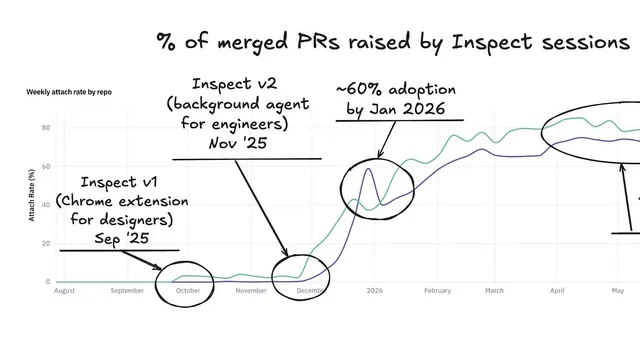
Ramp, a fintech company, built its own in-house coding agent called Inspect rather than adopting commercial tools, claiming it outperforms agents from frontier AI labs. The article is an in-depth look at their rationale and approach.
Detailed case study of a real company choosing to build rather than buy coding agent tooling, useful for engineering leaders weighing in-house development against off-the-shelf alternatives.
